



MORE COVERAGE


Twitter Coverage

Satyaagrah

Satyaagrah
Satyaagrah
Satyaagrah

Satyaagrah


JOIN SATYAAGRAH SOCIAL MEDIA


By 2041, Bangladesh’s waste will hit 142,322 tons daily, outpacing landfills as pollution worsens, while delays stall WTE projects; urgent Public-Private Partnerships must convert waste into electricity to ease pollution and energy shortages

Waste management remains one of the most pressing challenges for governments worldwide. According to available statistics, the waste generation rate in Bangladesh was estimated to be 0.52 kg per capita per day in 2021. Projections indicate that the daily waste generation rate is expected to rise to 0.80 kg per capita per day by 2030 and 1.19 kg per capita by 2041.
|
The total amount of waste generated daily in Bangladesh has been increasing steadily since 1991. In that year, urban areas in Bangladesh produced approximately 6,493 tons of municipal solid waste per day. By 2005, that figure had more than doubled to 13,330 tons per day. By 2014, the estimated daily waste generation had surged to 23,688 tons. Simultaneously, rapid urbanization has caused the urban population to grow from 21 million in 1991 to 33 million in 2005. By 2021, this number had reached approximately 65 million, with projections estimating an urban population of 85 million by 2030 and 119 million by 2041. Correspondingly, total waste generation is expected to reach a staggering 142,322 tons per day by 2041. Notably, since 2005, the rate of increase in daily waste generation has outpaced population growth due to a rise in the average per capita waste generation rate.
The rapid economic development of Bangladesh between 2009 and 2024, coupled with its growing population, has exacerbated environmental issues. Dhaka is now considered one of the most polluted cities in the world.
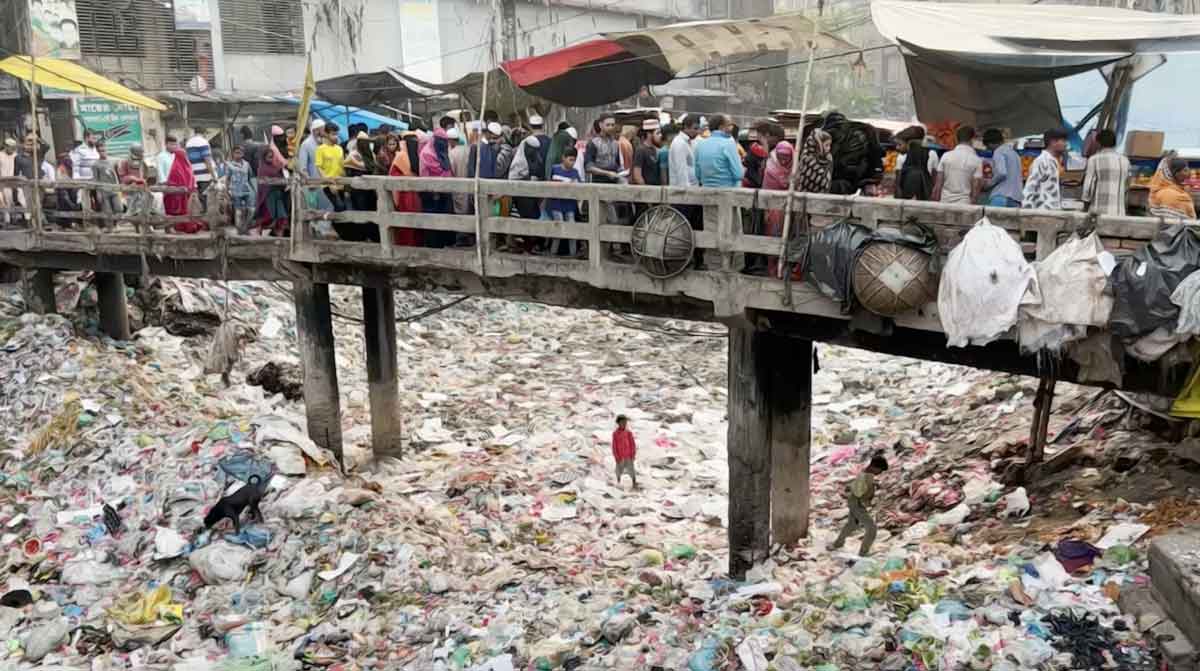
Currently, garbage disposal methods rely on open-air storage and landfills, leading to severe water, air, and land pollution. Additionally, the existing landfill capacity is nearing exhaustion, and the scarcity of land in and around Dhaka limits the possibility of constructing new landfills.
A closer look at waste generation trends reveals interesting patterns in Bangladesh’s two largest cities. Dhaka, which houses 21.11 percent of the country’s urban population, generates 28.26 percent of the nation’s urban waste. Chittagong, the second-largest city, accommodates 5.08 percent of the urban population but contributes 6.88 percent of the total waste. In contrast, smaller urban areas, which collectively account for 36.80 percent of the urban population, generate only 29.88 percent of the country’s waste.
|
To address this growing crisis, the Bangladeshi government has recognized the importance of waste-to-energy (WTE) solutions. WTE projects convert municipal solid waste into electricity, providing a sustainable alternative to landfilling while also addressing the country's electricity shortages.
In 2021, the Bangladesh government approved the construction of the country's first WTE power plant in Dhaka. The project was awarded to China Machine Engineering Corporation (CMEC) through a special-purpose vehicle model. However, despite receiving approval from the Cabinet Committee on Government Purchase (CCGP) in 2020, the project has yet to commence construction. One of the primary obstacles has been the absence of a finalized Power Purchase Agreement (PPA) with the Bangladesh Power Development Board (BPDB). This delay has hindered progress at a time when urban waste accumulation has reached unsustainable levels, necessitating immediate intervention.
Another initiative, the Narayanganj WTE power plant, is a collaborative effort involving UD Environmental Equipment Technology Co. Ltd, Everbright Environmental Protection Technology Equipment (Changzhou) Limited, and SABS Syndicate Ltd. This facility aims to generate 6 MW of electricity by incinerating solid waste collected from Narayanganj City Corporation (NCC).
|
The project aligns with Bangladesh’s broader strategy to implement sustainable waste management practices as landfill space diminishes and environmental concerns intensify. Authorities have emphasized WTE solutions as a viable alternative to conventional waste disposal methods.
Despite the apparent benefits, bureaucratic bottlenecks and regulatory hurdles have significantly delayed WTE projects in Bangladesh. The government allocated BDT 3.45 billion (approximately US$37 million) for the development of the Jalkuri Sanitary Landfill and associated infrastructure. Of this amount, over BDT 3.30 billion was spent on acquiring 23.29 acres of land, with 10 acres specifically designated for the WTE power plant. However, despite this substantial financial commitment, the project has faced delays due to the prolonged approval process involving multiple government agencies, including the Finance Ministry, the Law Ministry, the National Board of Revenue (NBR), and Bangladesh Bank.
|
Officials have expressed frustration over the excessive red tape, which has resulted in unnecessary delays. The inefficiency of government agencies in approving and facilitating these essential projects has not only stalled progress but has also worsened the environmental crisis. Delays in WTE project implementation continue to exacerbate public health hazards, increase environmental pollution, and add to the mounting waste management crisis.
Given the increasing urgency of waste management and the country's electricity shortages, Bangladesh must accelerate its efforts to establish additional WTE plants. The government should actively promote Public-Private Partnership (PPP) models to attract investment from domestic and international firms, particularly from India, Russia, and China. These countries have extensive experience in waste-to-energy technology and could contribute significantly to the successful implementation of WTE projects in Bangladesh.
|
A nationwide initiative to establish multiple WTE plants would not only mitigate the environmental impact of unchecked waste accumulation but also generate much-needed electricity. By adopting a comprehensive waste management strategy, Bangladesh can transform waste into a valuable resource, reducing dependency on fossil fuels and contributing to a cleaner, more sustainable environment.
Bangladesh stands at a critical juncture where waste management and energy production intersect. With urban waste generation expected to rise dramatically in the coming years, the government must take decisive action to expand WTE projects. Immediate steps should be taken to resolve bureaucratic obstacles, finalize agreements for stalled projects, and attract investment in additional WTE plants. By doing so, Bangladesh can address its waste crisis while simultaneously alleviating its ongoing electricity shortages, ensuring a more sustainable and livable future for its citizens. If authorities demonstrate genuine commitment, waste-to-energy projects can transform what is currently a mounting crisis into an opportunity for sustainable development.
 |
 |
Salah Uddin Shoaib Choudhury
Award-winning journalist, Columnist, Counterterrorism specialist and Author
Editor & Publisher, Blitz weeklyblitz.net
Chief Editor & Publisher, Jamjamat
Recipient of Freedom to Write Award from PENUSA (2005),
Moral Courage Award from AJC (2006),
Monaco Media Award from Prince Albert-II (2007)
Key to Englewood (NJ) from Mayor Michael Wildes (2007)
 Support Us
Satyagraha was born from the heart of our land, with an undying aim to unveil the true essence of Bharat. It seeks to illuminate the hidden tales of our valiant freedom fighters and the rich chronicles that haven't yet sung their complete melody in the mainstream.
While platforms like NDTV and 'The Wire' effortlessly garner funds under the banner of safeguarding democracy, we at Satyagraha walk a different path. Our strength and resonance come from you. In this journey to weave a stronger Bharat, every little contribution amplifies our voice. Let's come together, contribute as you can, and champion the true spirit of our nation.
 |  |  |
| ICICI Bank of Satyaagrah | Razorpay Bank of Satyaagrah | PayPal Bank of Satyaagrah - For International Payments |
If all above doesn't work, then try the LINK below:
DISCLAIMER: The author is solely responsible for the views expressed in this article. The author carries the responsibility for citing and/or licensing of images utilized within the text. The website also frequently uses non-commercial images for representational purposes only in line with the article. We are not responsible for the authenticity of such images. If some images have a copyright issue, we request the person/entity to contact us at This email address is being protected from spambots. You need JavaScript enabled to view it. and we will take the necessary actions to resolve the issue.


