


More Coverage


Twitter Coverage

JOIN SATYAAGRAH SOCIAL MEDIA


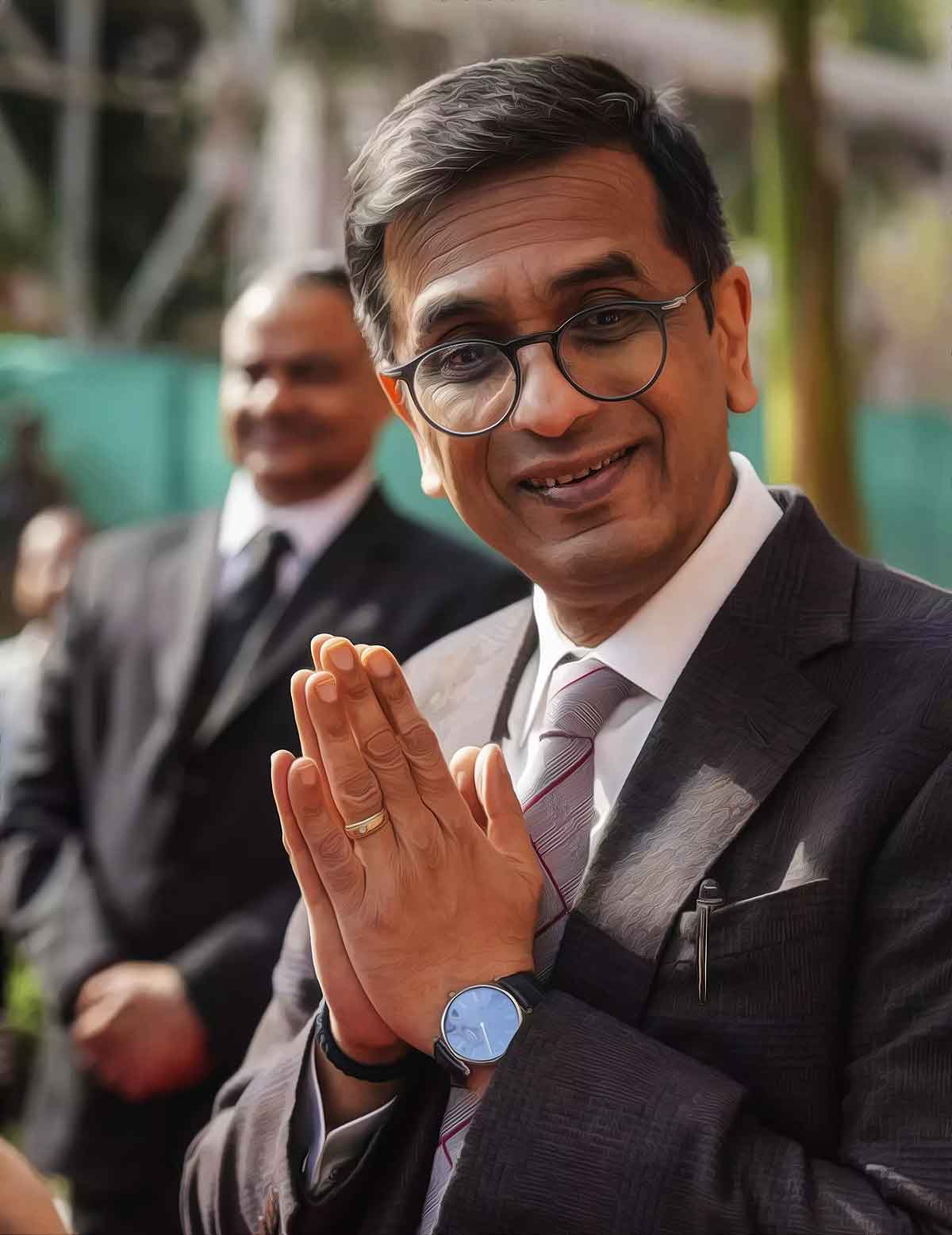
Chief Justice DY Chandrachud calls on lawyers and bar bodies to elevate the Court and Constitution above political biases, following his notable criticism of SCBA President Aggarwala's request for a suo motu review of the Electoral Bonds judgment

In what could be seen as a moment of courtroom drama unfolding outside the court, Chief Justice of India (CJI) DY Chandrachud recently had a few choice words that seemed to echo through the corridors of justice. Coming hot on the heels of a peculiar tiff with SCBA President Adish Aggarwala over the call for a suo motu reassessment of the Electoral Bonds judgment, the CJI's remarks were more than just a gentle nudge.
|
Chief Justice Chandrachud, in his characteristic manner, expressed his unease over the growing penchant of bar members to turn courtroom battles into public spectacles. With a slight twist of irony in his tone, he lamented, "Of late, I have been very disturbed by the tendency of members of Bar Association's to comment on cases which are pending before the court and of commenting on judgments delivered by the court." Here, he was not just making a passing comment but pointing out a troubling trend with the finesse of a seasoned jurist.
The CJI, using the platform to remind the legal eagles of their role, seemed to subtly jest at their expense, advocating for a higher standard of conduct. He underscored the need for lawyers to remember their oath as officers of the court, tasked with the grave responsibility of upholding the integrity of legal discourse. In his address, Chandrachud didn’t just talk to the lawyers; he talked at them, urging them to rise above the common fray and place the sanctity of the court and the constitution before any fleeting political sentiment.
Chief Justice of India (CJI) DY Chandrachud, in a gathering that could rival any theatrical performance in its delivery of drama and introspection, made some striking comments about the political entanglements of the legal profession. Speaking at the centenary celebration of the High Court Bar Association at Nagpur Bench of Bombay High Court, he artfully navigated the murky waters of political bias and professional duty.
"Pertinently," began the CJI, setting the stage for a lesson in both law and life, "lawyers, like any other individuals, will have their own political inclination and beliefs. However, they should rise above that and their highest loyalty should lie with the courts and the Constitution," he underscored, not so subtly hinting at the expected stature of legal minds above the fray of everyday politics.
Diving deeper into this narrative, he drew from the annals of philosophical thought, evoking Aristotle’s notion of humans as inherently political beings. "In a vibrant and argumentative democracy, like ours, most individuals have a political ideology or inclination. To quote Aristotle 'human beings are political animals'. Lawyers are no exception. However, for members of the bar, one's highest loyalty must not lie with partisan interests, but to the court and the Constitution," he elaborated, casting lawyers in the light of guardians of legal sanctity rather than mere players in the political arena.
The Chief Justice didn’t just stop at defining the problem; he hailed the solution, or rather, the ideal. He posited the independent bar as the "moral bulwark" necessary to uphold the rule of law and constitutional governance, subtly implying the weight of responsibility that comes with the legal robe.
The setting of his discourse, amidst the historical centenary celebration, wasn't just a backdrop but a poignant reminder of the longstanding tradition and duty that the legal fraternity carries forward. Through his speech, Chandrachud offered a satirical yet serious commentary on the legal profession's dance with democracy, urging a recommitment to the core values of justice and constitutionality.
Chief Justice of India DY Chandrachud's remarks recently gained an extra layer of significance. Just a short while ago, he openly criticized the Supreme Court Bar Association (SCBA) President and Senior Advocate Adish Aggarwala. The reason? Aggarwala's request for a spontaneous reassessment of the Electoral Bonds judgment. This reproof in open court set the stage for a significant conversation about the role of legal professionals in public discourse.
In his latest address, the CJI delved into the duty of bar members to serve as conduits of legal understanding to the public. He advocated for the use of various platforms, including opinion pieces in newspapers, media appearances, and public lectures, to communicate the court's decisions. He highlighted the unique position of legal professionals, saying, "In this sense, the bar has the potential to act as a bridge between the court and the citizens. In fulfilling your role. The bar can effectively translate complex legal concepts and proceedings into accessible language for the public, fostering a deeper understanding of our constitutional values and the true purpose of our judgments."
Chief Justice Chandrachud didn’t stop there. He proceeded to reinforce the judiciary's steadfast commitment to impartiality and independence, underscoring its role as a guardian of democracy. He remarked on the judiciary's consistent efforts to uphold its autonomy and "non partisanship, a separation of powers from the executive, the legislature, and vested political interests." Through these observations, the CJI not only shed light on the judiciary's responsibilities but also on its ongoing endeavor to maintain a balanced and fair governance structure, free from external influences and biases.
Chief Justice of India DY Chandrachud, in a reflective tone, recently emphasized a fundamental truth within the legal sphere. He articulated a significant connection between the judiciary's independence and that of the legal profession. "We must not forget, however, that there is a close link between the independence of the judiciary and the independence of the bar," he stated, underscoring an often-overlooked aspect of legal autonomy.
He went on to describe the weighty process behind the decisions of constitutional courts, painting a picture of a system driven by detailed legal scrutiny and a deep commitment to constitutional values. According to the CJI, these judicial decisions are not just mere statements but the result of "rigorous proceedings, thorough legal analysis, and a commitment to constitutional principle."
Chandrachud further elaborated on the life of a judgment beyond the courtroom, saying, "But once the judgment is pronounced, it is public property. As an institution, our shoulders are broad. We stand ready to receive both praise and criticism, bouquets and brickbats through journalistic pieces, political commentary, or on the social media." His words reflected an understanding of the judiciary's role in a democratic society, open to scrutiny and discussion.
|
However, he pointed out a distinction that should exist in how legal professionals, particularly bar association members, interact with these judgments. "But as members and office bearers of Bar Associations with years of training and experience, you must distinguish yourself from the layperson while reacting to judgments of the court and engaging in legal discussion," he remarked, hinting at the higher standard expected from those within the legal field.
Lastly, the CJI delineated the broader role of a bar association, which, in his view, transcends the mere advocacy of lawyers' interests. He proposed that these associations have a "broader institutional responsibility to enhance the functioning of the judiciary and protect the dignity of the court." Through this statement, Chandrachud not only defined the expectations from legal practitioners but also highlighted their integral role in maintaining the judiciary's integrity and efficacy.
Chief Justice of India DY Chandrachud underscored the critical role of Bar Associations in shaping the legal landscape, focusing on the twin pillars of quality and accessibility. He posited, “Bar Associations must focus on improving the quality of advocacy at the bar, and more importantly, making our courtrooms more accessible and safe for our citizens.” This statement reflects a broader vision for a judicial system that is not only competent but also welcoming and secure for everyone involved.
The CJI’s remarks came against the backdrop of troubling events in the legal community, notably the assault on Senior Advocate Gaurav Bhatia and a young lawyer during a strike at a Noida court. The Supreme Court's proactive step in taking suo motu cognizance of the incident highlights the judiciary's concern over maintaining a safe and respectful environment within legal premises.
Highlighting the relative peace in Nagpur, Chief Justice Chandrachud made an observational remark to the local lawyers, “You are fortunate that these incidents are not par for the course in Nagpur,” but he was quick to underline the broader responsibility of Bar Associations. He stressed the importance of ensuring the safety of legal practitioners, saying that it is crucial for Bar Associations to actively protect lawyers who come to practice before the court.
With the advent of hybrid hearings, legal practice has transcended geographical boundaries, allowing lawyers from different parts of the country to participate in court proceedings across various regions. In this evolving context, CJI Chandrachud advocated for a shift towards a more accommodative and inclusive legal culture. He emphasized the need for Bar Associations to take proactive steps in making sure that courts are not just places of legal contestation but also spaces where all lawyers feel safe and welcomed, thus fostering a more inclusive legal environment.
 |
 Support Us
Satyagraha was born from the heart of our land, with an undying aim to unveil the true essence of Bharat. It seeks to illuminate the hidden tales of our valiant freedom fighters and the rich chronicles that haven't yet sung their complete melody in the mainstream.
While platforms like NDTV and 'The Wire' effortlessly garner funds under the banner of safeguarding democracy, we at Satyagraha walk a different path. Our strength and resonance come from you. In this journey to weave a stronger Bharat, every little contribution amplifies our voice. Let's come together, contribute as you can, and champion the true spirit of our nation.
 |  |  |
| ICICI Bank of Satyaagrah | Razorpay Bank of Satyaagrah | PayPal Bank of Satyaagrah - For International Payments |
If all above doesn't work, then try the LINK below:
DISCLAIMER: The author is solely responsible for the views expressed in this article. The author carries the responsibility for citing and/or licensing of images utilized within the text. The website also frequently uses non-commercial images for representational purposes only in line with the article. We are not responsible for the authenticity of such images. If some images have a copyright issue, we request the person/entity to contact us at This email address is being protected from spambots. You need JavaScript enabled to view it. and we will take the necessary actions to resolve the issue.


