



MORE COVERAGE


Twitter Coverage

Satyaagrah

Satyaagrah

Satyaagrah

Satyaagrah

Satyaagrah


JOIN SATYAAGRAH SOCIAL MEDIA


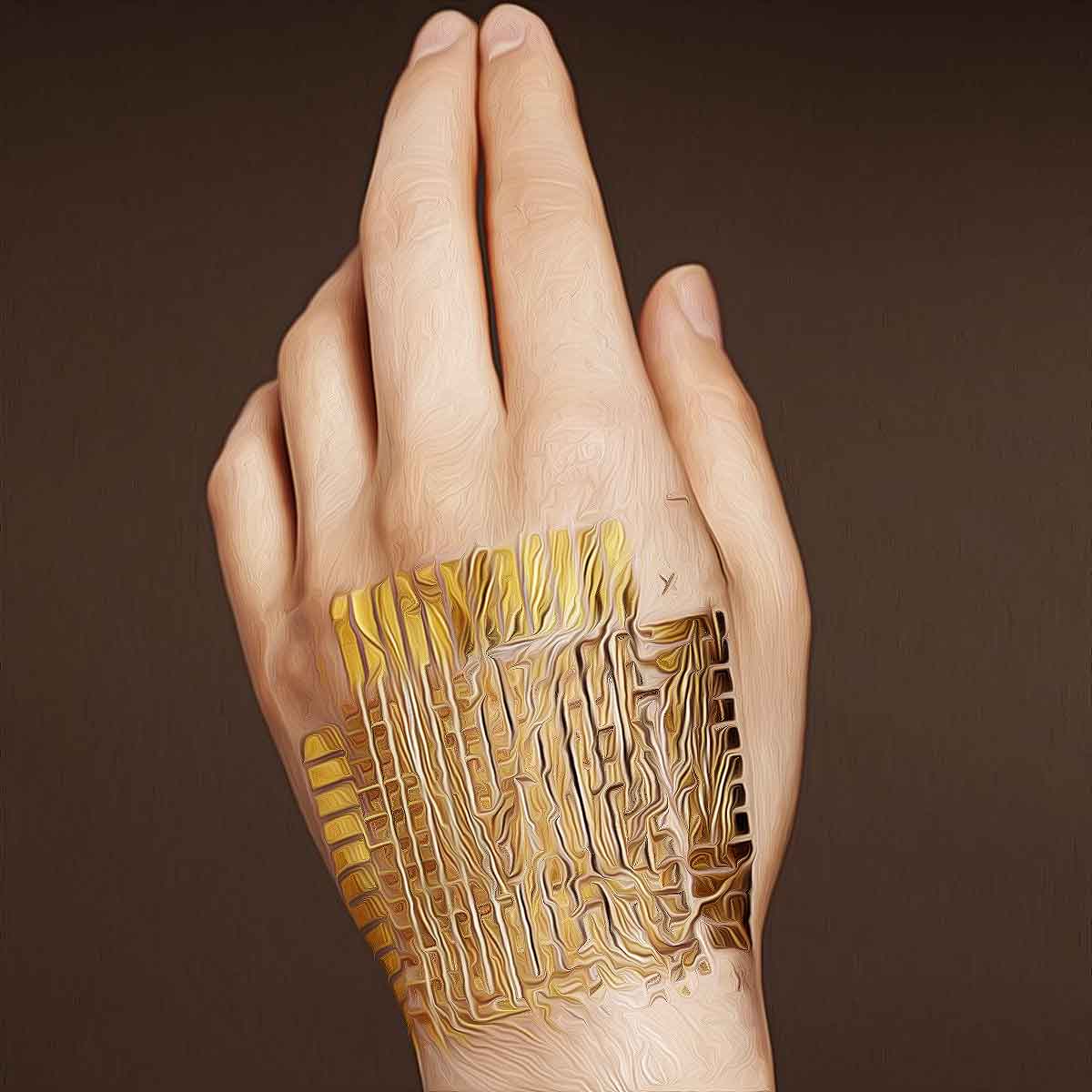
Team of scientists led by Indian-origin engineer Ravinder Dahiya at University of Glasgow develops an 'Electronic skin' capable of feeling sensations like pain: could provide amputees, with prosthetics with feeling of touch that they lost

A team of engineers at the University of Glasgow in the UK led by India-born Ravinder Dahiya, Professor of Electronics and Nanoengineering at the James Watt School of Engineering, has developed an electronic skin that can feel sensations like pain.
A robot hand that uses the smart skin, has shown that it can ‘learn’ to react to external stimuli. This could help create a new generation of smart robots with near-human sensitivity
More importantly, it could provide amputees, with prosthetics -- artificial arms or legs -- with some semblance of the feeling of touch that they lost.
Prof Dahiya’s team shares details of their work in a paper: ‘Printed Synaptic Transistors based Electronic Skin for Robots to Feel and Learn’, published on June 1, in the journal Science Robotics.
|
The researchers describe how they built their prototype computational electronic skin (e-skin), and how it improves on the current state of the art in touch-sensitive robotics.
For decades, researchers have tried to create artificial (electronic) skin which possesses the sensation of touch. The widely used method was to spread an array of contact or pressure sensors across the electronic skin’s surface to allow it to detect when it comes into contact with an object. Data from the sensors is then sent to a computer to be processed and interpreted.
This can take a while: which is used to delay or degrade the electronic skin’s response to real-world tasks.
 |
E-skin that ‘learns’
The team in Glasgow, overcomes this handicap, by doing some of the processing in situ i.e., at the skin itself, avoiding too much to-and-fro traffic of the data.
In a communication to this reporter today, Prof Dahiya explained the nature of the breakthrough: “The distinctive part of our latest work is the e-skin’s capability to learn and perform some processing of tactile data, at the point of touch itself, instead of sending all raw data to the brain-equivalent on a robotic platform.”
In fact, it is how the human peripheral nervous system works -- and the Glasgow University team drew inspiration from this and mimicked the human system as best it could.
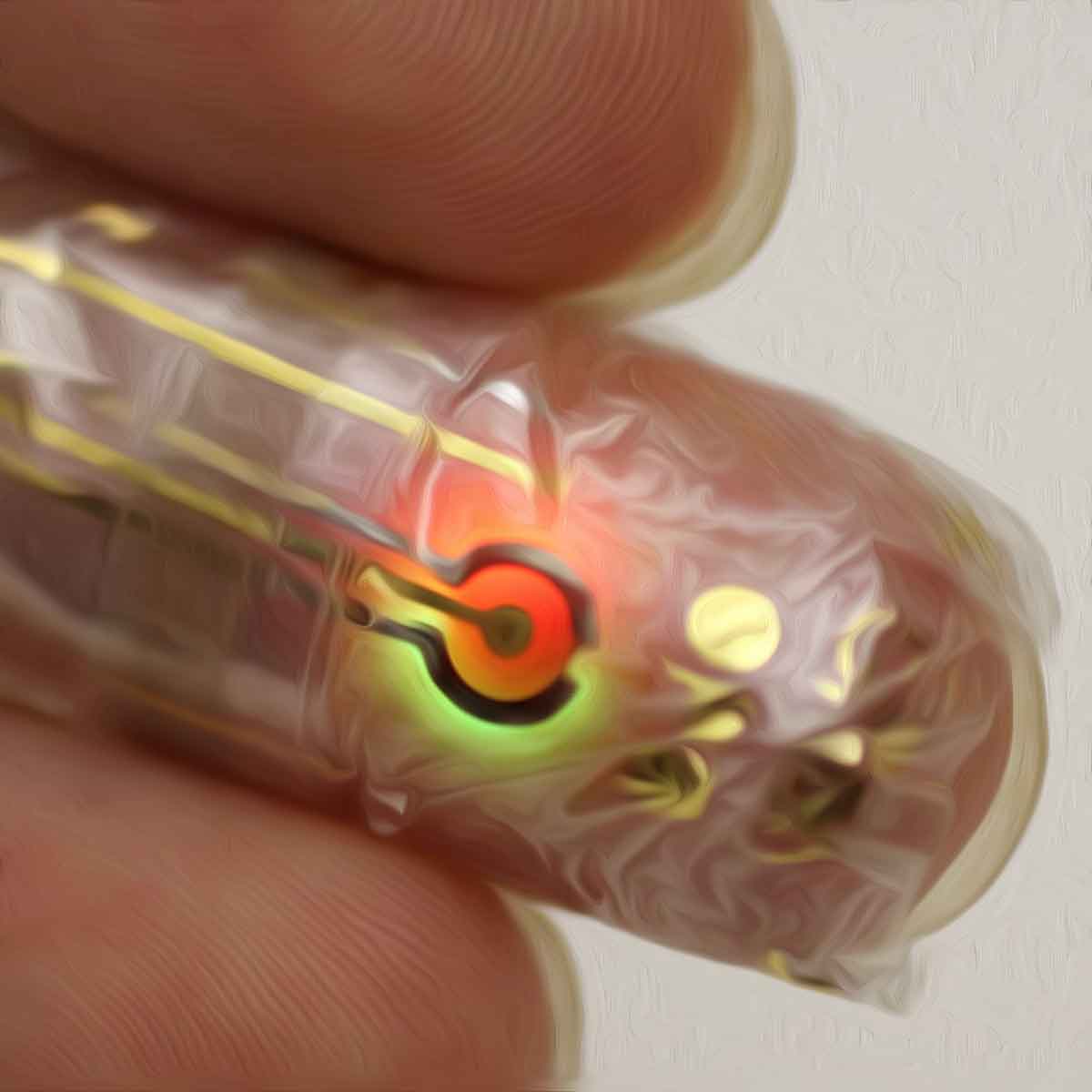
To build an electronic skin capable of quick response, the researchers printed a grid of 168 “synaptic” transistors made from zinc-oxide nanowires directly onto the surface of a flexible plastic surface. (Synaptic devices are those that have the ability to ‘learn’ in ways similar to nerve endings.) Then, they connected the synaptic transistor with the skin sensor present over the palm of a fully-articulated, human-shaped robot hand.
“We believe that this is a real step forward in our work towards creating large-scale neuromorphic printed electronic skin capable of responding appropriately to stimuli,” says Prof Dahiya, who did his M.Tech at IIT Delhi before he moved to the US for higher studies.
Adds Fengyuan Liu, co-author of the paper: “In the future, this research could be the basis for a more advanced electronic skin which enables robots capable of exploring and interacting with the world in new ways, or building prosthetic limbs which are capable of near-human levels of touch sensitivity.”
The recent work would help advances in both robotics and prosthetics, says the team.
 |
References:
 Support Us
Satyagraha was born from the heart of our land, with an undying aim to unveil the true essence of Bharat. It seeks to illuminate the hidden tales of our valiant freedom fighters and the rich chronicles that haven't yet sung their complete melody in the mainstream.
While platforms like NDTV and 'The Wire' effortlessly garner funds under the banner of safeguarding democracy, we at Satyagraha walk a different path. Our strength and resonance come from you. In this journey to weave a stronger Bharat, every little contribution amplifies our voice. Let's come together, contribute as you can, and champion the true spirit of our nation.
 |  |  |
| ICICI Bank of Satyaagrah | Razorpay Bank of Satyaagrah | PayPal Bank of Satyaagrah - For International Payments |
If all above doesn't work, then try the LINK below:
DISCLAIMER: The author is solely responsible for the views expressed in this article. The author carries the responsibility for citing and/or licensing of images utilized within the text. The website also frequently uses non-commercial images for representational purposes only in line with the article. We are not responsible for the authenticity of such images. If some images have a copyright issue, we request the person/entity to contact us at This email address is being protected from spambots. You need JavaScript enabled to view it. and we will take the necessary actions to resolve the issue.


